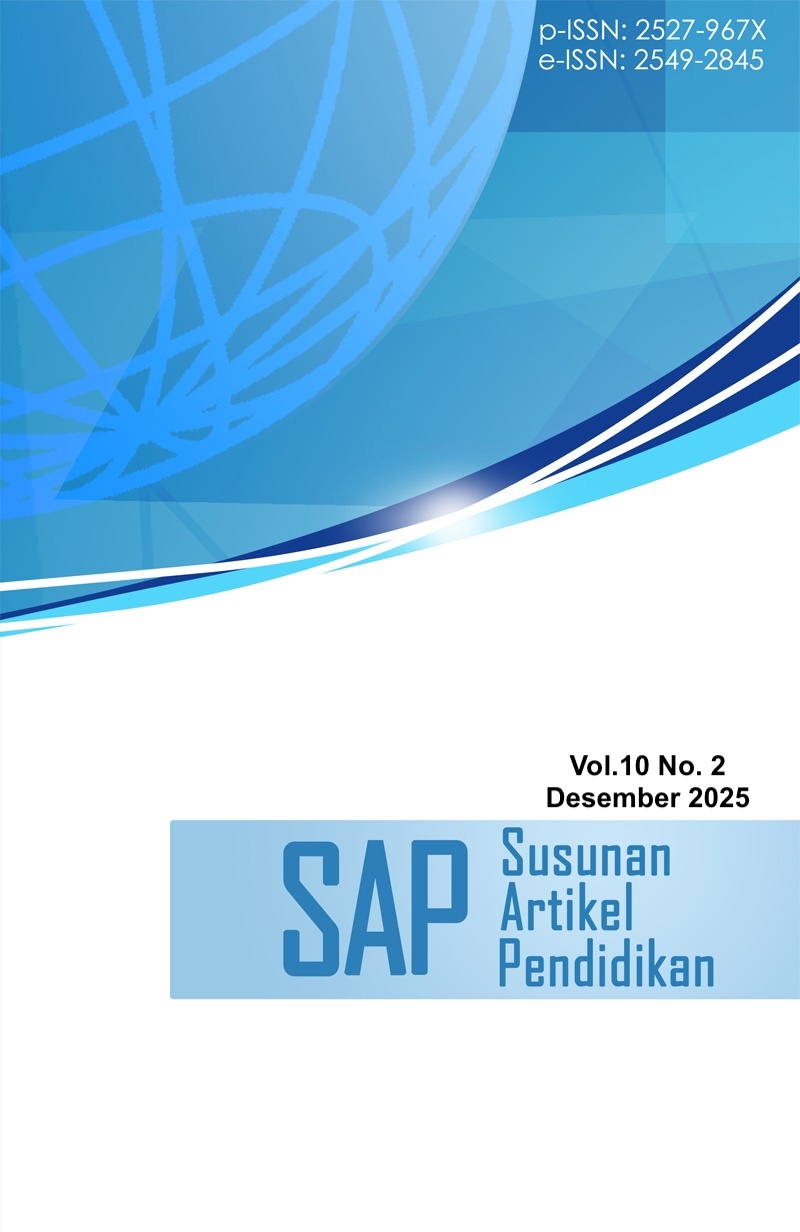
Peningkatan Mutu Pusat Pembelajaran Sunan Kalijogo dengan Strategi Two Stay Two Stray
DOI:
https://doi.org/10.30998/sap.v10i2.615Keywords:
Mutu Pembelajaran, PKBM, Strategi Pembelajaran, Two Stay Two StrayAbstract
The learning system in non-formal educational institutions still faces challenges such as low active student participation and the dominance of a tutor-centered approach that makes the learning process monotonous. Therefore, innovative, interactive, and student-centered learning strategies are needed to create an interesting and meaningful learning atmosphere. This study aims to evaluate the effectiveness of the Two Stay Two Stray (TSTS) learning strategy in improving the quality of education at the Sunan Kalijogo Kediri Community Learning Center (PKBM) and provide strategic recommendations for innovative student-centered learning. The study was conducted in May 2025 using a qualitative approach, focusing on the experiences, behaviors, motivations, and interactions of participants holistically. The TSTS strategy fosters active two-way communication between tutors and students. So that students can express opinions, share ideas, and collaborate in finding solutions to help reduce boredom and improve understanding. The findings show that TSTS increases student participation and encourages a more interesting, inclusive, and humanistic learning environment, thereby improving the quality of teaching. The study contributes academically by becoming the basis for further research on the TSTS method in other PKBM programs, such as skills or entrepreneurship training.Downloads
References
[1] Z. Zaifullah, H. Cikka, M. I. Kahar, M. J. Ismail, and I. Iskadar, “Peran Pusat Kegiatan Belajar Masyarakat (PKBM) Dalam Penyelenggaraan Pendidikan Nonformal di Era Society 5.0,” Innov. J. Soc. Sci. Res., vol. 3, no. 2, pp. 14539–14549, 2023.
[2] G. Gunartin, S. Soffiatun, and H. F. A. Hayati, "Pusat Kegiatan Belajar Masyarakat Sebagai Tempat Alternatif Menumbuhkan Keman-dirian Wirausaha Warga Belajar (Studi Pada PKBM Insan Karya Pamulang Tangerang Selatan),” Pekobis J. Pendidikan, Ekon. dan Bisnis, vol. 3, no. 2, p. 30, 2018.
[3] S. Almaidah, “Analisis Efektivitas Kinerja Pusat Kegiatan Belajar Masyarakat (PKBM) Dalam Menyelenggarakan Program Pendi-dikan Berbasis Masyarakat,” Media Ekon. dan Manaj., vol. 32, no. 2, 2017.
[4] Soraya Grabiella Dinamika and Dewi Shinta Wulandari Lubis, “Pengembangan Kemampuan Mengajar Tutor dengan Metode Student Centered Learning Pada PKBM Bumi Literasi,” JPM J. Pengabdi. Masy., vol. 2, no. 2, pp. 73–76, doi: 10.47065/jpm.v2i2.259, 2021.
[5] M. A. Rizka and R. Hardiansyah, “Strategi pengembangan inovasi program pendidikan nonformal sebagai best practices bagi pusat kegiatan belajar masyarakat,” J. Pendidik. dan Pemberdaya. Masy., vol. 3, no. 2, p. 187, doi: 10.21831/jppm.v3i2.10745, 2016.
[6] H. Haryati, “Two Stay Two Stray Strategy on the Students’ Reading Comprehension: The Effectiveness and the Students’ Perspectives,” LITE J. Bahasa, Sastra, dan Budaya, vol. 17, no. 2, pp. 176–184, 2021.
[7] S. W. Nofianti, “Penerapan Pembelajaran Kooperatif Tipe The Two Stay Two Stray Untuk Meningkatkan Kemampuan Komunikasi dan Pemahaman Konsep pada Pembelajaran IPA di Kelas V SDN 32 Bengkulu Tengah,” J. Kaji. Pendidik. Dasar, vol. 1, no. 1, pp. 23–30, doi: 10.33369/kapedas.v1i1. 21064, 2022.
[8] A. Mashalahatil Ummah, H. Susilo, L. Pendidikan Luar Sekolah Fakultas Ilmu Pendidikan Gedung O-, and J. Lidah Wetan Sby Kode Pos, “Metode Cooperative learning Pada Proses Pembelajaran Paket A Kelas Komunitas di PKBM Homeschooling Pena Surabaya,” J+PLUS J. Mhs. Pendidik. Luar Sekol., vol. 13, no. 1, pp. 372–382, 2024.
[9] I. Siregar, T.Salmah, T. Hartati, and I. S. Nola, “Refleksi Dan Evaluasi Dalam Penelitian Tindakan Kelas,” QOUBA J. Pendidik., vol. 1, no. 1, pp. 41–47, [Online]. Available: https://ejournal.hsnpublisher.id/index.php/quoba/article/view/159, 2024.
[10] Y. Juniarti, “Peningkatan Kecerdasan Interpersonal Anak Usia Dini Melalui Media Celemek Pintar,” J. Audi, vol. 3, no. 1, p. 27, doi: 10.33061/ad.v3i1. 2071, 2018.
[11] B. Harahap, Z. Zulhimma, P. Napitulu, and S. Waldohuakbar, “Penerapan Metode Two Stay-Two Stray (TSTS) Dalam Meningkatkan Hasil Belajar Siswa Dalam Mata Pelajaran Ski Kelas Vii Di Mtsn 1 Padangsidimpuan,” Cognoscere J. Komun. dan Media Pendidik., vol. 2, no. 2, pp. 115–125, doi: 10.61292/ cognoscere.185, 2024.
[12] A. A. Fitri and F. N. Pertiwi, “Efektivitas Model Pembelajaran Two Stay Two Stray (TSTS) Berbasis Teacher and Peer Feedback terhadap Kemampuan Refleksi Peserta Didik,” J. Tadris IPA Indones., vol. 3, no. 3, pp. 238–251, doi: 10.21154/jtii.v3i3. 2166, 2023.
[13] T. Purnomo Aji and S. Sri Wulandari, “Analisis Model Pembelajaran Kooperatif Tipe Two Stay Two Stray (TSTS) Terhadap Hasil Belajar Siswa,” J. Off. Adm. Educ. Pract., vol. 1, no. 3, pp. 340–350, 2021.
[14] D. Apriakanti, M. Kusuma, and M. Nurhayati, “The Effectiveness of Two Stay Two Stray (TSTS) Cooperative Learning Model in Improving Students ’Critical Thinking Skills,” J. Sci. Educ. Res., vol. 4, no. 1, pp. 40–43, 2020.
[15] D. Alisa Putri and W. Wisanti, “Penerapan Model Pembelajaran Kooperatif Tipe Two-Stay Two-Stray (TSTS) untuk Melatih Kemampuan Berpikir Kritis Siswa Kelas X pada Materi Ekosistem,” J. Inov. Pembelajaran Biol., vol. 4, no. 2, pp. 125–136, doi: 10.26740/jipb.v4n2. p125-136, 2023.
[16] W. Apriani, “Pengaruh Penerapan Model Pembelajaran Tipe Two Stay Two Stray ( TSTS ) Terhadap Motivasi Belajar Siswa Kelas,” vol. 4, no. 1, pp. 2–5, 2018.
[17] M. Muhsin, T. N. Asyifa, N. Haliza, A. Ferdiansyah, and A. Asniwati, “Penerapan Model Pembelajaran Two Stay Two Stray Dalam Pembelajaran IPAS DI Kelas V SDN Sungai MIAI 1,” J. Teach. Elem. Educ., vol. 1, no. 1, pp. 7–12, 2025.
[18] I. P. W. Pratama, I. W. Suwatra, and I. M. C. Wibawa, “Efektivitas Model Pembelajaran TSTS ( Two Stay Two Stray ) Terhadap Hasil Belajar IPA Siswa SD,” vol. 4, no. April, pp. 32–39, 2021.
[19] P. Septiani and I. Rosmilawati, “Implementasi Metode Pembelajaran Aktif Pada Warga Belajar Paket B Di Pusat Kegiatan Belajar Masyarakat Al-Istiqomah,” Jurnal. Eksistensi Pendidik. Luar Sekol., vol. 9, no. 2, pp. 64–69, doi: 10.30870/e-plus.v9i2.32206, 2024.
[20] A. Prastyo, M. W. Ardiansyah, R. Romadhoni, and P. Purnomo, “Development of Human-Machine Interface IoT Learning Media Based on Android for Sorting Machines,” Edunesia J. Ilm. Pendidik., vol. 6, no. 2, pp. 837–854, 2025.
[21] F. Fadliansyah, U. Primagraha, L. P. Promting, and D. Learning, “Pengaruh Model Pembelajaran Two Stay Two Stray (TSTS) Terhadap Hasil Belajar Ipa Pada Siswa,” vol. 2, no. 2, pp. 204–214, 2023.
[22] J. Jumardan, T. Yuniawan, and S. S. D. Handayani, “Pendekatan Saintifik Melalui Strategi Pembelajaran Kooperatif Tipe Two Stay Two Stray Untuk Meningkatkan Hasil Belajar IPA Siswa Kelas V Sekolah Dasar,” JIKAP PGSD J. Ilm. …, vol. 5, no. 3, pp. 531–540, 2021.
[23] K. J. A. Purnama, I. G. N. Japa, and I. M. Suarjana, “Efektivitas Model Pembelajaran Two Stay Two Stray (TSTS) Dalam Meningkatkan Hasil Belajar Matematika,” J. Penelit. dan Pengemb. Pendidik., vol. 4, no. 3, p. 343, doi: 10.23887/jppp.v4i3.27413, 2020.
[24] N. Zuanda and R. F. Tanjung, “Asatiza : Jurnal Pendidikan,” vol. 6, no. 2, pp. 160–169, 2025.
[25] V. Salsa, N. Talaar, L. O. Amril, and R. Wati, “Pengaruh Model Pembelajaran Two Stay Two Stray ( TSTS ) Terhadap Hasil Belajar Siswa Dalam Pelajaran IPAS Di Kelas V Sekolah Dasar,” vol. 4, pp. 2535–2547, 2025.
[26] R. M. Gillies, “Cooperative learning: Review of research and practice,” Aust. J. Teach. Educ., vol. 41, no. 3, pp. 39–54, doi: 10.14221/ajte. 2016v41n3.3, 2026.
[27] A. K. Ahmad, Ishak, and Afdalia, “Peningkatan Hasil Belajar Matematika melalui Model Pembelajaran Kooperatif Tipe Two Stay Two Stray,” Al-Irsyad J. Math. Educ., vol. 1, no. 2, pp. 79–87, doi: 10.58917/ijme.v1i2.23, 2022.
[28] N. Sari, “Improving Learning Independence of Elementary Students through the Two Stay Two Stray Method,” J. Child. Dev., vol. 4, no. 1, pp. 145–153, doi: 10.25217/jcd. v4i1.3970, 2024.
[29] S. Suraji and A. Sari, “Penerapan Model Kooperatif Tipe Two Stay Two Stray (TSTS) dalam Upaya Meningkatkan Kemampuan Pemecahan Masalah Matematis Siswa SD,” Suska J. Math. Educ., vol. 3, no. 2, p. 67, doi: 10.24014/sjme. v3i2.4043, 2017.
Downloads
Published
Issue
Section
License
Copyright (c) 2025 Tri Esti Rahayuningtyas, Widyatmoko Widyatmoko, Mahadika Pradipta Himawan (Author); Choerul Umam (Translator)

This work is licensed under a Creative Commons Attribution-ShareAlike 4.0 International License.